



Senator Flavio Bolsonaro, an ally of US President Donald Trump, and Brazil’s incumbent President Luiz Inacio Lula da Silva will face off in a run-off on October 25 for the top job of Latin America’s powerhouse economy after neither won a majority in Sunday’s vote.
The country’s electoral court in Brasilia said neither the 80-year-old incumbent, seeking his fourth non-consecutive term, nor the 45-year-old son of former president Jair Bolsonaro would garner the majority vote needed for an outright win.
The court had Mr Bolsonaro with just over 56 million votes to Mr Lula’s 53.7 million, with 99.8% of the vote reported. The next presidential term is set to begin on January 5.
The winner will be in charge of Latin America’s biggest economy and a population of 214 million. A win for Mr Bolsonaro would increase US influence in Latin America. If Mr Lula wins, Brazil will keep its distance from Washington and continue to deepen its relationship with China.
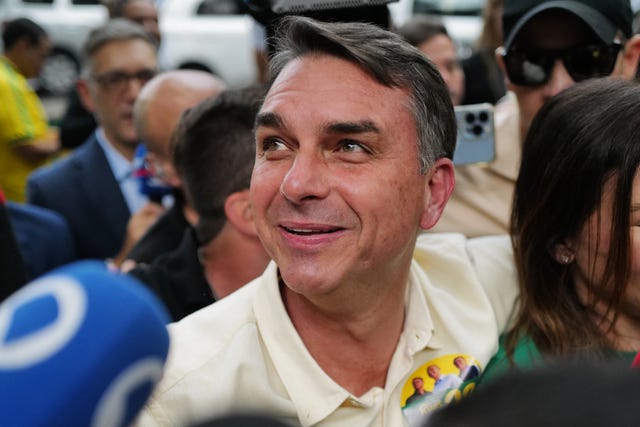
Mr Bolsonaro addressed the press and a small group of supporters, including some wearing green and yellow Brazil jerseys, outside his Brasilia house.
“Brazil wants change, that’s the reading of what happened today,” he said.
“It’s the end of the Workers’ Party era,” he added, in a reference to Mr Lula’s party.
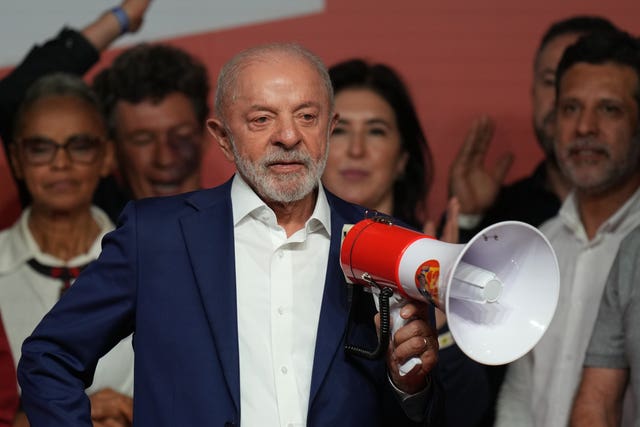
Mr Lula, seeking to be encouraging ahead of an uphill battle to beat Mr Bolsonaro in the run-off, said the result was “unexpected” as he had thought he could win in the first round.
“Tomorrow we start a new campaign,” Mr Lula said. “I am very good in the knockout stage. We will see who has the best plan.”
Both Mr Lula and Mr Bolsonaro will have three weeks to reach moderate voters who did not support them in the first round.

Augusto Cury, a writer who finished in third place with 3.4 million votes, said he would not endorse either in the run-off. Ronaldo Caiado and Renan Santos, two candidates who garnered about 5.3 million votes combined, have previously said the same.
In the campaign ahead, Mr Lula is expected to try to capitalise on the popularity of his social policies and his rival’s many legal woes.
While the once widely popular Mr Lula saw his approval ratings plummet during his third term, standing up to the US gave him a boost. And he still enjoys a strong base of supporters who credit his social policies for improving millions of Brazilians’ lives.
Mr Bolsonaro will likely lean into his messaging on affordability and link the president to corruption scandals.
He has promised to crack down on Brazilian criminal groups and insisted that Brazil needs to strike better deals with the Trump administration, including in the rare minerals economy, second only to China. Mr Bolsonaro also has campaigned on releasing his father and bringing him back to politics.
Both candidates face image problems: Roughly half of Brazil’s population disapproves of the Bolsonaro family, and roughly half disapprove of Mr Lula’s Workers’ Party, according to multiple polls.
Four years ago, Mr Lula beat then incumbent Jair Bolsonaro by about 2.1 million votes.
While it was a successful night for Mr Bolsonaro, nothing is won yet, said Mayra Goulart, a political scientist from the Federal University of Rio de Janeiro. Mr Lula should “look at the votes for Augusto Cury and Ronaldo Caiado and try to reduce abstention”, she said.
No significant fraud has ever been detected since Brazil adopted its electronic voting system in the 1990s.
The Organisation of American States’ electoral observation mission reported on Sunday that “the voting has been going smoothly and under adequate safety conditions”. Electoral authorities assured that electronic votes are secure and verifiable.
Voters appeared largely confident that the country’s voting system cannot be tampered with.
Josemar Lauriano Pereira, a 46-year-old lawyer in Rio de Janeiro, said that the rapid availability of results helped combat fraud and uncertainty.
“When results take a lot of time, it creates an opening for people to cast doubt on the results, to say there’s been a problem,” he said.


Share