

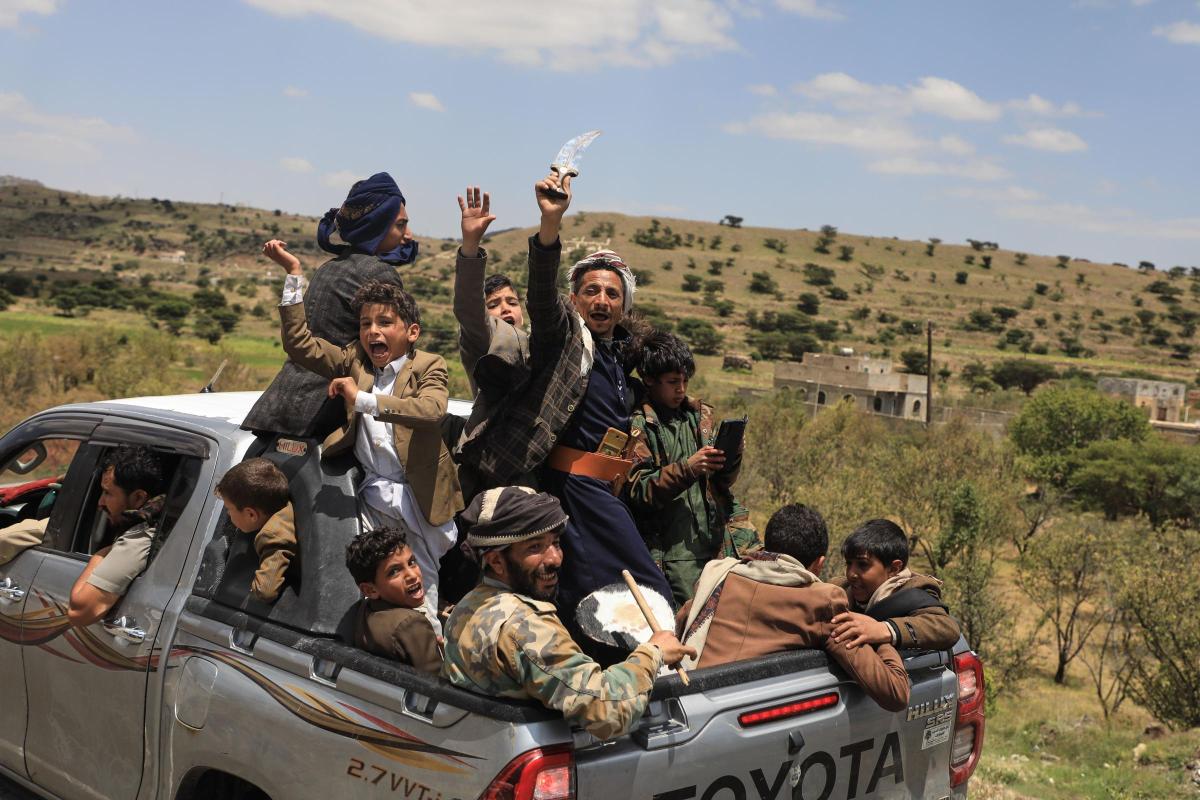

Forces of Yemen’s internationally recognised government have begun a major offensive against the Iranian-backed Houthi rebels on the country’s Red Sea coast, under an intensified air campaign by the Saudi-led coalition.
The offensive came just after the rebels said they had captured more territory in the south-western part of Yemen, taking a key town in a blow to the Saudi-backed forces as they advanced towards a strategic provincial capital in the region.
The Saudi-led coalition spokesman, Maj Gen Turki al-Malki, said 100 fighter jets were providing support to the forces of Yemen’s internationally recognised government fighting against the Houthis.
He said the coalition has secured “air protection” of the strategic Bab el-Mandeb Strait and destroyed hundreds of Houthi targets as part of the ongoing campaign.
With God’s blessing, the “Dawn of Yemen” operation has been launched to restore state institutions, liberate the capital, Sana’a, and end the coup by the terrorist Houthi militias. pic.twitter.com/RHWKS4MrXy
— د/ رشاد محمد العليمي (@PresidentRashad) October 5, 2026
The Houthi rebels seized the town of Turbah on Sunday, shortly before the internationally recognised government announced a major military operation against them.
The escalation between Saudi Arabia and the Houthis has revived Yemen’s civil war after a four-year ceasefire.
Turbah sits on a main road linking the provincial capital of Taiz with the port city of Aden, which serves as an interim seat of Yemen’s government. Over the years, the town was a major post for the government forces defending Taiz against the Houthis.
Earlier, the Houthis seized several villages and areas on Taiz’s outskirts in a series of advances, paving the way for the rebels to encircle Taiz, Yemen’s third-largest city.
The Houthis made a swift push on the country’s western coast on the Red Sea in early September. They captured the strategic city of Mokha and several Red Sea islands, gains that enabled them to control the Yemeni side of the Bab el-Mandeb Strait, a crucial chokepoint through which 12% of global trade transits.
🆘 #Yemen: Escalating fighting has has displaced more than 149,000 people so far.
WFP has reached over 70,000 people in major displacement hotspots and is preparing to support up to 1.5 million if needs rise. But food stocks are depleting rapidly.
🔗 https://t.co/m0iZrmFVym pic.twitter.com/6tZ6yU6rLK
— World Food Programme (@WFP) October 2, 2026
In their announcement on Sunday, the Saudi-backed government said it was mobilising troops across government-held areas.
Rashad al-Alimi, head of the ruling Presidential Leadership Council, said in a televised speech that the operations were aimed at “recovering the remaining territories” controlled by the Houthis. He called for the international community to provide support to his government.
Hours after Mr al-Alimi’s declaration, Saudi military spokesperson Maj Gen al-Malki, vowed “full operational support” to the Yemeni government forces, until the Houthis are “eliminated”.
He also stressed Saudi Arabia’s right to take all necessary measures to deter the rebels who continued to fire missiles and drones at the kingdom as part of the nearly three-month escalation that revived Yemen’s civil war.
On Monday, factions allied with the Saudi-backed coalition fighting the Houthis said they launched offensives against the rebels on the eastern flank of the coastal areas that the Houthis had seized in their latest advances.
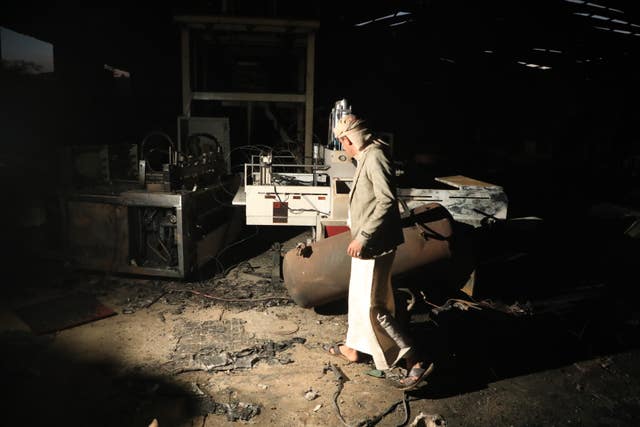
They attacked Houthi positions in the town of Dhubab, on the coast of Bab el-Mandeb strait, said Col Majed al-Nazili, spokesman of the Saudi-backed forces.
The Giants Brigades, a government-allied group, said it began a “decisive military operation against the Houthi militias”, also in the Bab el-Mandeb area.
Mr al-Alimi said in a post on X on Monday that the operation — dubbed “Yemen Dawn” — has started with the aim of “restoring state institutions, liberating” Sanaa, Yemen’s rebel-controlled capital, and ending “the Houthi terrorist militia coup”.
Col al-Nazili said government forces were carrying out a “strategic offensive” on Sanaa. The Houthi media office reported multiple air strikes by the Saudi coalition on their territories, including Sanaa.
The latest flare-up began in mid-July, when the Houthis accused Saudi Arabia of bombing the airport in Sanaa to prevent the landing of an unauthorised Iranian flight. The rebels responded with missile and drone attacks against Saudi Arabia and the Yemeni government forces in the country.
They also announced a blockade on Saudi shipping in the Red Sea and attacked several Saudi-linked vessels.
There are people behind every crisis.
Wherever they may come from, show your solidarity with all who are displaced. pic.twitter.com/CP8b0ckqWC
— UNHCR, the UN Refugee Agency (@Refugees) September 12, 2026
Then in September, they intensified their campaign, storming down the Red Sea coast in their biggest land grab in years.
Yemen’s civil war began in 2014 when the Houthis descended from their northern stronghold, capturing Sanaa and forcing the government to flee into exile in Saudi Arabia. The war created one of the world’s worst humanitarian disasters and killed more than 150,000 people.
The latest bout of violence has killed at least 959 people and wounded more than 4,200 others, according to the World Health Organisation.
The flare-up forced more than 145,000 people to flee their homes inside Yemen, according to the UN migration agency. More than 3,000 others fled across the waters into Djibouti, the agency reported.
Last week, Yemen’s health ministry — part of the internationally recognised government — warned about the impact of the conflict on health facilities and medical staff across the entire province of Taiz.


Share