

LIKE all motorists, I have been feeling the pinch of rising fuel bills.
Petrol prices are just under £1.30 a litre and is diesel often over £1.30 a litre already. Prices are also set to rise further in April, when the Govern-ment imposes a second fuel duty hike. In response, disgruntled businesses and drivers are voicing concerns across the UK.
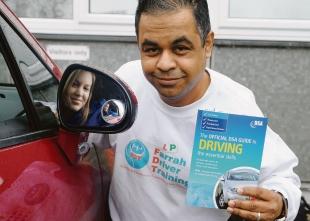
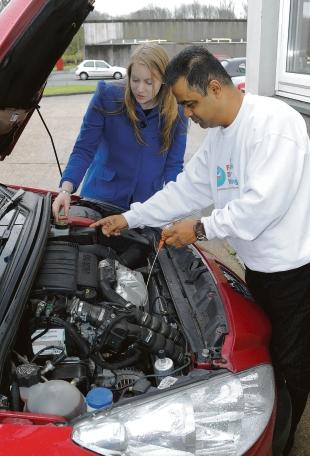
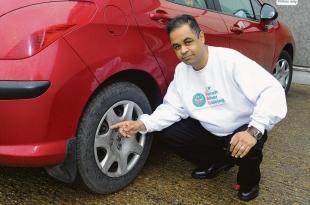
So when driving instructor Tariq Musaji offered me an opportunity to find out how to knock a significant amount off my annual fuel bill, I jumped at the chance.
Intrigued as to how making a few minor changes to my driving habits could save me cash and help the environment, I took to the wheel to have my technique scrutinised through an eco-driving lesson.
The style of driving, involving skills like fewer gear changes and reduced braking, has been honed by instructors and driving experts over the past few years and now forms a section of the driving test.
Keeping to the style is estimated to save the average driver, who racks up around 12,000 miles a year, between £100 and £200 annually. Motorists driving around 30,000 miles a year are said to save £500.
Tariq, 43, of London Road, Wickford, began the lesson by asking me to drive around Basildon for 15 minutes, so he could see how I was wasting fuel.
Like anyone who has seen a few years pass since they gained their licence, I knew I had picked up some bad habits – but little did I know I was committing some cardinal fuel-wasting sins.
The first thing Tariq pointed out was my wasteful braking.
By not reading what was going on ahead of me and easing off the accelerator in anticipation, I was braking heavily when I needed to slow down or stop – both a fuel-waster and a driving hazard.
Tariq, who runs Farrah Driving Training, said: “Look at what’s going on ahead of you, not just at the car in front.
“If you see other cars’ brake lights coming on, ease off the gas, and do the same if you’re approaching a junction or can see a crossing or roundabout coming up.
“It sounds obvious, but a bit of planning can make a big difference.”
Keeping the car moving prevents waste, because stopping and starting require extra fuel.
The next of my bad habits to be put under the spotlight was my overly-frequent gear changing.
Tariq said: "Every gear change lets off a bit of fuel, so using block gear changes, like coming to a standstill from fourth instead of needlessly going down the gears, prevents that.”
I had never gone straight from third to fifth gear when joining a dual carriageway, but Tariq said it was more efficient if the road ahead was clear.
Changing gear as soon as possible is another fuel-saver. Changing gears when an engine speed is about 2,000rpm in a diesel car, or 2,500rpm in a petrol, is the most efficient time.
Keeping to the speed limits was Tariq’s next piece of advice, as travelling at 80mph uses 15 percent more fuel than 70mph.
For most cars, 45 to 50mph is the most fuel-efficient speed. It is made even more efficient if the driver avoids constant and unnecessary acceleration.
Luckily, I didn’t get stuck in a traffic jam or wait at a railway crossing during my lesson, but Tariq told me to turn my engine off after three minutes if I did – as many drivers don’t bother.
By the end of the lesson, I was putting Tariq’s tips into action. Although it will take time and disipline to change my habits, I am now anticipating less frequent trips to the filling station, and a few extra pounds in my pocket.
He said: “We’re all feeling the pinch.
“A few changes make the fuel tank last longer and you will see a difference.”


Comments: Our rules
We want our comments to be a lively and valuable part of our community - a place where readers can debate and engage with the most important local issues. The ability to comment on our stories is a privilege, not a right, however, and that privilege may be withdrawn if it is abused or misused.
Please report any comments that break our rules.
Read the rules hereLast Updated:
Report this comment Cancel